Overview
Short answer: October and November are the best months to visit Nepal — the monsoon has withdrawn, the air is clear and Kathmandu averages just 59.4 mm and 7.5 mm of rain respectively. March to May is the warm second season. The monsoon normally runs 13 June to 2 October and delivers eighty percent of Nepal's rain.
Before you travel: weather is an average, not a promise, and published normals are revised. Check current conditions with Nepal's Department of Hydrology and Meteorology and current festival dates with the Nepal Tourism Board before you commit to dates. Every figure here was checked against the source cited beside it on 28 July 2026.
What is the best month to visit Nepal?
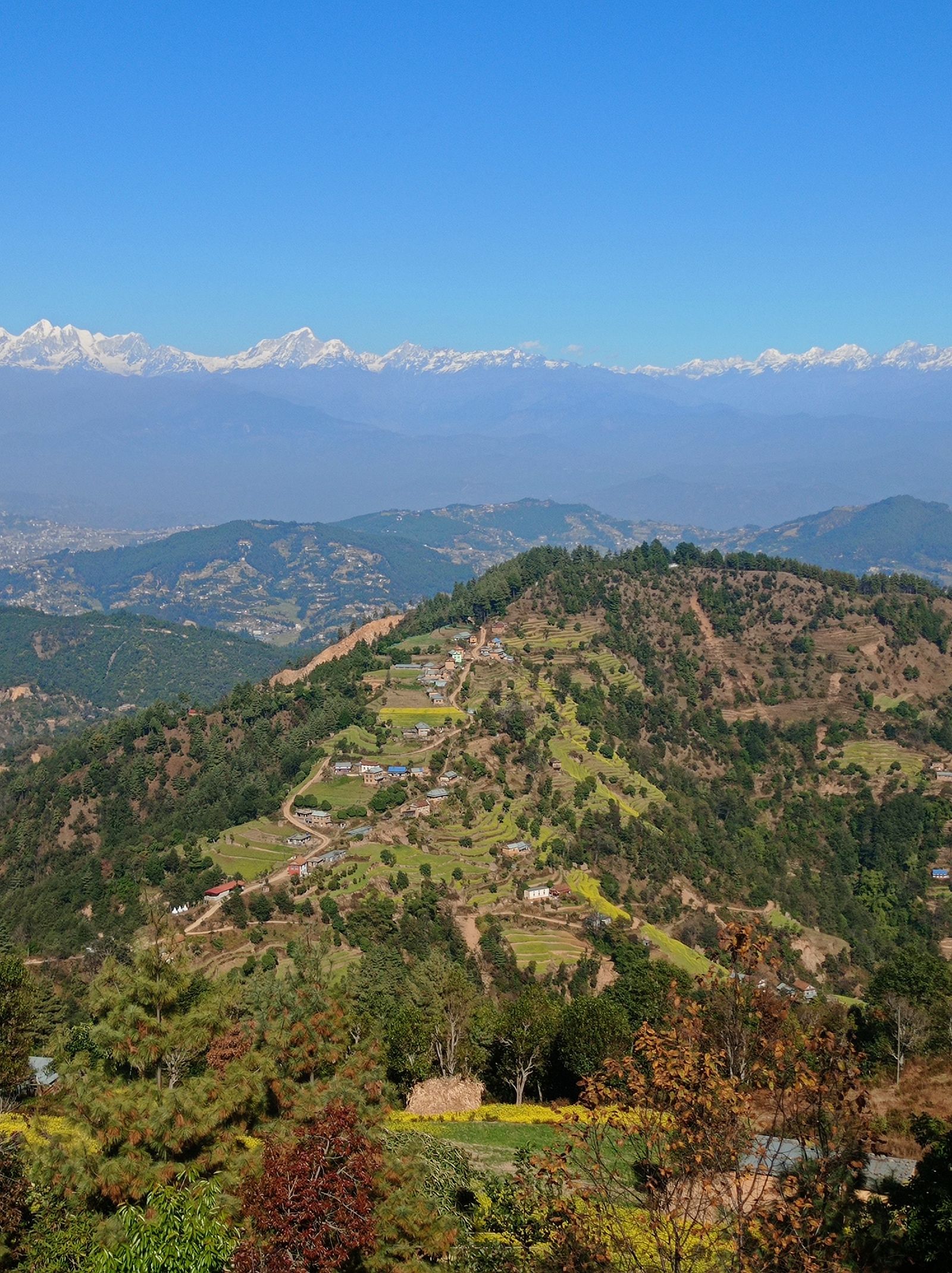
October, on the numbers. The monsoon has normally withdrawn, the rain has washed the haze out of the air, and daytime temperatures in Kathmandu still average 25.8°C. November is drier still — 7.5 mm of rain across the whole month, with one rain day on average — and colder at night. The Nepal Tourism Board puts it the same way: "the clearest skies are found after the monsoon in October and November."
If those months don't suit, March to May is the alternative: warmer, hazier at low altitude, and the season when the rhododendron forests flower.
Kathmandu month by month: temperature and rainfall
| Month | Mean daily max | Mean daily min | Rainfall | Rain days |
|---|---|---|---|---|
| January | 18.0°C | 2.1°C | 14.2 mm | 2 |
| February | 20.2°C | 3.8°C | 16.7 mm | 3 |
| March | 24.3°C | 7.5°C | 31.2 mm | 4 |
| April | 27.4°C | 11.3°C | 54.4 mm | 6 |
| May | 28.2°C | 15.5°C | 114.2 mm | 12 |
| June | 28.3°C | 19.0°C | 256.4 mm | 17 |
| July | 27.7°C | 20.0°C | 359.6 mm | 23 |
| August | 28.0°C | 19.7°C | 314.2 mm | 22 |
| September | 27.2°C | 18.2°C | 183.1 mm | 15 |
| October | 25.8°C | 13.0°C | 59.4 mm | 4 |
| November | 22.7°C | 7.4°C | 7.5 mm | 1 |
| December | 19.4°C | 3.0°C | 14.2 mm | 1 |
Source: WMO World Weather Information Service, Kathmandu, climatological normals supplied by Nepal's Department of Hydrology and Meteorology; checked 28 July 2026. One honest caveat: the WMO record does not state the averaging period for Kathmandu, and the Department's current normals period is 1991–2020. Read these as long-run averages, not as this decade's numbers.
The shape of the year is unmistakable even so. July alone brings more rain than January to April combined. Kathmandu's maximum temperature barely moves between April and September — it is the rain, not the heat, that decides the season.
When is the monsoon in Nepal?
Nepal's Department of Hydrology and Meteorology publishes normal dates: "The normal onset and withdrawal date in Eastern Nepal is 13th June and 2nd October respectively," giving a monsoon of 112 days. June to September is the official monsoon season.
| Monsoon | Date |
|---|---|
| Normal onset | 13 June |
| Normal withdrawal | 2 October |
| Earliest recorded onset | 31 May 1996 |
| Latest recorded onset | 27 June 1982 |
| Earliest recorded withdrawal | 2 September 1995 |
| Latest recorded withdrawal | 19 October 2013 |
Source: DHM, Monsoon Onset and Withdrawal date information, checked 28 July 2026.
Worth planning around: in the Department's own record, every year from 2016 to 2024 saw the monsoon withdraw between 5 and 16 October — consistently later than the 2 October normal. An early-October trek can still meet rain. Mid-October onwards is the safer bet.
The Nepal Tourism Board's climate page gives the scale of it: "Eighty percent of all the rain in Nepal is received during the monsoon (June-September)," against an average annual rainfall of 1,600 mm.
How wet is Pokhara compared with Kathmandu?
Much wetter. Pokhara sits where the monsoon hits the first wall of hills, and the Tourism Board puts its annual rainfall at 3,345 mm against 1,600 mm for the country as a whole.
| Month | Mean daily max | Mean daily min | Rainfall |
|---|---|---|---|
| January | 19.7°C | 7.1°C | 23.1 mm |
| February | 22.2°C | 9.2°C | 34.6 mm |
| March | 26.7°C | 12.8°C | 60.0 mm |
| April | 29.8°C | 15.7°C | 127.6 mm |
| May | 30.1°C | 18.4°C | 359.2 mm |
| June | 30.6°C | 20.9°C | 669.0 mm |
| July | 30.0°C | 22.0°C | 940.3 mm |
| August | 30.2°C | 22.0°C | 866.3 mm |
| September | 29.3°C | 20.8°C | 640.8 mm |
| October | 27.5°C | 16.7°C | 139.7 mm |
| November | 24.1°C | 11.9°C | 17.8 mm |
| December | 20.7°C | 8.0°C | 21.7 mm |
Source: WMO World Weather Information Service, Pokhara, 1981–2010 normals supplied by the Department of Hydrology and Meteorology; checked 28 July 2026.
Now the useful contrast. Mustang and Manang sit in the rain shadow behind the Himalaya, and the Tourism Board records Mustang's annual rainfall at below 300 mm — roughly a ninth of Pokhara's. That single fact is why Upper Mustang and Dolpo are the treks people do in July and August while everywhere else is under cloud.
Season by season
Autumn (October–November)
The clearest, driest and busiest stretch of the year. Kathmandu sees 59.4 mm of rain in October and 7.5 mm in November, with warm days and nights dropping to a mean minimum of 7.4°C by November. This is peak trekking season and it coincides with Nepal's two biggest festivals, so book accommodation and internal flights well ahead.
Winter (December–February)
Cold, quiet and often brilliantly clear. Kathmandu averages a 2.1°C minimum in January and only 14.2 mm of rain, and the Tourism Board notes that even at the severest, December and January bring "compensating bright sun and brilliant views." Lower-altitude walks and valley sightseeing work well; high passes can close under snow. Heating is rare in Nepali buildings, so pack more warm clothes than the daytime temperatures suggest.
Spring (March–May)
Warming quickly — Kathmandu's mean maximum climbs from 24.3°C in March to 28.2°C in May — with rhododendrons in flower and the main Himalayan climbing season under way. The trade-off is haze building at low altitude and pre-monsoon rain arriving: May already averages 114.2 mm across 12 rain days in Kathmandu.
Monsoon (June–September)
Wet, green and cheap on crowds. Kathmandu takes 359.6 mm across 23 rain days in July. Trails are muddy and leeches are real, mountain views are unreliable, and flights to mountain airstrips are frequently delayed. It is a good time for the rain-shadow treks, for Chitwan's low season, and for the Kathmandu Valley's temples without the queues.
How much colder is it at altitude?
The Tourism Board's rule of thumb: "Average temperatures in Nepal drop 6°C for every 1,000 m you gain in altitude." A teahouse 2,000 m above Kathmandu is therefore around 12°C colder than the city you flew into — the single most common packing mistake on a first trek. Source: Nepal Tourism Board, Climate, checked 28 July 2026.
Which festivals should I time my trip around?
Nepal's major festivals follow the lunar calendar, so their dates move by two to three weeks from year to year. Plan the season, then check the exact dates.
- Dashain — the longest and most important festival, falling in September or October. Offices close, families travel, and long-distance buses and domestic flights fill up.
- Tihar — the festival of lights, two to three weeks after Dashain, in October or November.
- Holi — the spring festival of colours, in March.
- Indra Jatra — Kathmandu's great masked-dance and chariot festival, in September.
- Buddha Jayanti — the Buddha's birthday, marked at Lumbini, Boudhanath and Swayambhunath, usually in May.
Current dates are published on the Nepal Tourism Board's festivals pages.
Frequently asked questions
What is the best month to trek in Nepal?
October and November for stability and clarity, March to May for warmth and flowers. October averages 59.4 mm of rain in Kathmandu against 359.6 mm in July.
Is it worth visiting Nepal during the monsoon?
Yes, if you pick the right ground. Eighty percent of Nepal's rain falls between June and September, but Mustang receives under 300 mm a year in total, so the rain-shadow treks stay walkable while the rest of the country is wet.
How cold does Kathmandu get in winter?
January is the coldest month, with a mean daily minimum of 2.1°C and a mean daily maximum of 18.0°C.
What is the wettest month in Nepal?
July, in both cities we have normals for: 359.6 mm in Kathmandu and 940.3 mm in Pokhara.
When are the mountains most visible?
After the monsoon clears. The Nepal Tourism Board points to October and November for the clearest skies; winter is often clear too, just colder.
Can I visit Nepal year-round?
Yes. In the Tourism Board's words, "There is no seasonal constraint on traveling in and through Nepal" — the seasons change what you should plan to do, not whether you should come.
Will the monsoon really be over by early October?
Not reliably. The normal withdrawal date is 2 October, but every monsoon from 2016 to 2024 withdrew between 5 and 16 October.
Turning a season into a trip
Once you have your window, the trekking permits guide covers what you need to walk, and the visa guide covers getting in. You can compare places to stay across Nepal on Travia in your own currency.
Rules and figures change — confirm with the official source before travelling. The authorities here are Nepal's Department of Hydrology and Meteorology, the WMO World Weather Information Service and the Nepal Tourism Board. Reviewed by Travia Editorial on 28 July 2026.
Comments
Public — everyone on this page can read them. Tag people and businesses with @.
Comments
Sign in to comment.