Overview
Short answer: fly between major hubs (Kathmandu–Pokhara is ~25 minutes; the road is 6–8 hours), take a tourist bus or shared jeep for the Kathmandu–Pokhara–Chitwan circuit, and use a metered taxi or a ride-hailing app inside the cities. For trailheads, the transport IS the trek's logistics — Lukla is reached only by air or a multi-day walk-in.
Before you travel: operator schedules and fares change, and Nepal has no single published fare schedule for buses or domestic flights the way it does for visas. Route and city-transport facts below are checked against the Nepal Tourism Board; fare figures are ranges commonly cited by travel agencies and airlines, flagged as such, not from one official source — confirm the current price when you book.
How do I get between Kathmandu, Pokhara and Chitwan?
| Route | By air | By road |
|---|---|---|
| Kathmandu ↔ Pokhara | ~25 minutes, several daily departures | 6–8 hours by tourist bus, shared jeep or private car |
| Kathmandu ↔ Bharatpur (for Chitwan) | ~20 minutes | Around 5–6 hours by road |
| Kathmandu ↔ Bhairahawa (for Lumbini) | ~30 minutes | Around 8–9 hours by road |
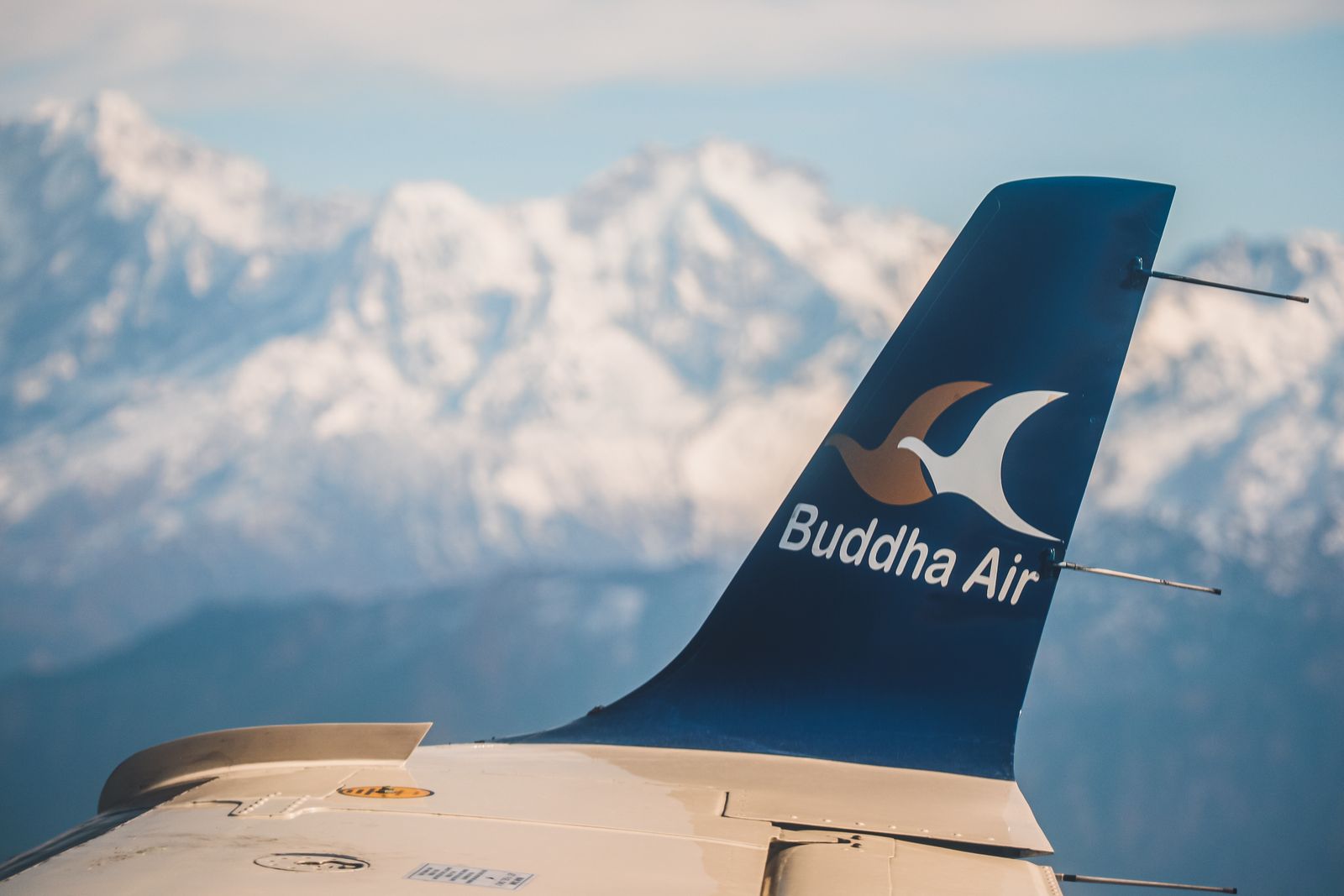
Domestic carriers include Buddha Air, Yeti Airlines, Shree Airlines, Sita Air and Nepal Airlines — the Nepal Tourism Board describes Nepal Airlines as running "an extensive network of air services to major parts of the country," alongside "more than 18" other domestic airlines providing regular and chartered services, mountain flights included. Flights are the fast option and the only one immune to road conditions, but are routinely delayed or grounded by weather — build in a buffer day around any onward international connection.
Tourist buses run daily on the Kathmandu–Pokhara–Chitwan circuit and are the standard budget choice; the Tourism Board confirms "tourist bus services" connect Kathmandu to both. Long-distance public and night buses to every major Nepali city depart from the "New Bus Park at Gongabu at Ring Road near Balaju, Kathmandu," supplemented by six-seater Sumo vans, 12-seater vans and air-conditioned minibuses on routes buses don't cover as comfortably.
Why do foreigners pay more for domestic flights than Nepali citizens?
Nepal runs a government-regulated multi-tier domestic airfare system: Nepali citizens pay a subsidised NPR rate, Indian and SAARC nationals pay a mid-tier rate, and other international travellers pay a higher USD-denominated fare. Nepali press coverage — reporting on the policy rather than an official fare table — puts Kathmandu–Pokhara at roughly NPR 5,000–6,500 for Nepali citizens against roughly $110–145 for other foreign passengers, and Kathmandu–Lukla at roughly NPR 9,000–12,000 for citizens against roughly $200–250 for foreign passengers. Treat those as the range travel agencies currently quote, not a fixed price — always get a live fare from the airline or a booking agent, since seat class and season move it substantially. Source: reporting in the Kathmandu Post, checked 6 August 2026.
How do I get to a trailhead?
This depends entirely on which trek. Some starting points are road-accessible; others are not — see the trekking permits guide and the Annapurna vs Everest comparison for the two most common examples:
- Everest region — a roughly 30-minute mountain flight from Kathmandu to Lukla (Tenzing–Hillary Airport), Nepal's best-known short high-altitude strip; or the overland alternative, a long bus to Jiri followed by a multi-day walk in. In recent peak seasons Lukla flights have often departed from Manthali airport in Ramechhap instead of Kathmandu, adding a pre-dawn road transfer — we could not find a current civil-aviation notice confirming the arrangement for the coming season, so ask your airline which airport your ticket actually departs from.
- Annapurna region — reached by road to Besi Sahar, off the Pokhara–Kathmandu highway, with no weather window to miss; Jomsom at the far end of the circuit has its own small airport.
How do I get around inside Kathmandu and Pokhara?
Metered taxis are the standard option — the Tourism Board gives the standard rate as "Rs. 30 per kilometer," with no tip expected; look for the taxi sign on the roof and a black license plate. Ride-hailing apps (Pathao and inDrive are the ones travellers use most) work in both cities and remove the need to negotiate a fare up front.
Kathmandu also has a public bus network: government-run green Sajha buses run fixed routes along the valley's main roads, stopping only at designated stations — useful if you're not in a hurry and want the cheapest way to cross the city. Battery-run three-wheelers and, in the old city, cycle rickshaws cover short hops; the Tourism Board specifically recommends the rickshaw for "quick sightseeing" around old Kathmandu. Bicycle hire is available in Thamel and Jhochhen (Freak Street) for travellers who want to self-navigate.
Private car or jeep hire, arranged through a travel agent or rental company, is the most flexible option for a day of sightseeing or a group heading to a trailhead together, and the cost splits well across several travellers.
How much buffer time should I build in?
More than the schedule suggests. Nepal's domestic aviation is weather-dependent by geography, not by any one carrier's reliability, and mountain routes (Lukla, Jomsom and similar strips) are affected most. If a flight connects to an international departure, leave at least one full buffer day; two is safer in the shoulder seasons. Road journeys are slowed by the terrain itself — a distance that looks short on a map routinely takes twice as long as the same distance would on flat ground.
Frequently asked questions
How long does it take to get from Kathmandu to Pokhara?
About 25 minutes by domestic flight, or 6–8 hours by tourist bus, shared jeep or private car over a scenic mountain road.
Why do foreign tourists pay more for domestic flights in Nepal?
Nepal runs a government-regulated tiered airfare system: Nepali citizens pay a subsidised rate, SAARC nationals pay a mid-tier rate, and other foreign travellers pay a higher USD-based fare, a policy reported to be based on the gap between local and foreign purchasing power.
How do I get from Kathmandu to Lukla for the Everest trek?
By a roughly 30-minute mountain flight — though in recent peak seasons that flight has often departed from Manthali airport in Ramechhap rather than Kathmandu directly, adding a road transfer. The overland alternative is a long bus to Jiri and a multi-day walk in.
What's the standard taxi rate in Kathmandu?
The Nepal Tourism Board cites Rs. 30 per kilometre for metered taxis, with no tip expected. Ride-hailing apps like Pathao and inDrive are also widely used and show the fare before you book.
Do I need to book domestic flights in Nepal in advance?
For popular routes and trailhead strips like Lukla, yes — capacity is limited and weather delays create backlogs, so seats on the next clear-weather flight fill fast. Book ahead and keep buffer days either side.
Plan the rest of your trip
The visa guide covers getting into Nepal, the seasons guide covers when flight delays are most likely, and the trekking permits guide covers what each region needs. You can find a place to stay at either end of your journey, or book a guided trip that already includes the transport.
Schedules and fares change — confirm with your airline, bus operator or booking agent before travelling. Transport facts sourced from the Nepal Tourism Board and its transportation page, checked 6 August 2026; airfare-tier reporting from the Kathmandu Post, checked the same day. Reviewed by Travia Editorial on 6 August 2026.
Comments
Public — everyone on this page can read them. Tag people and businesses with @.
Comments
Sign in to comment.