Overview
Short answer: the Kathmandu Valley World Heritage Site is seven separate monument zones — three royal Durbar Squares (Kathmandu, Patan, Bhaktapur), two Buddhist stupas (Swayambhunath, Boudhanath) and two Hindu temple complexes (Pashupatinath, Changu Narayan) — inscribed as one UNESCO property in 1979. Entry is ticketed separately at each site; a realistic first visit covers three or four of them in a day, not all seven.
Before you travel: entry fees at religious and heritage sites in Nepal are set by the trust or municipality that manages each one and do change. Every figure below is the Nepal Tourism Board's own published fee table, checked 6 August 2026 — confirm the current price at the ticket counter regardless.
What are the seven monument zones?
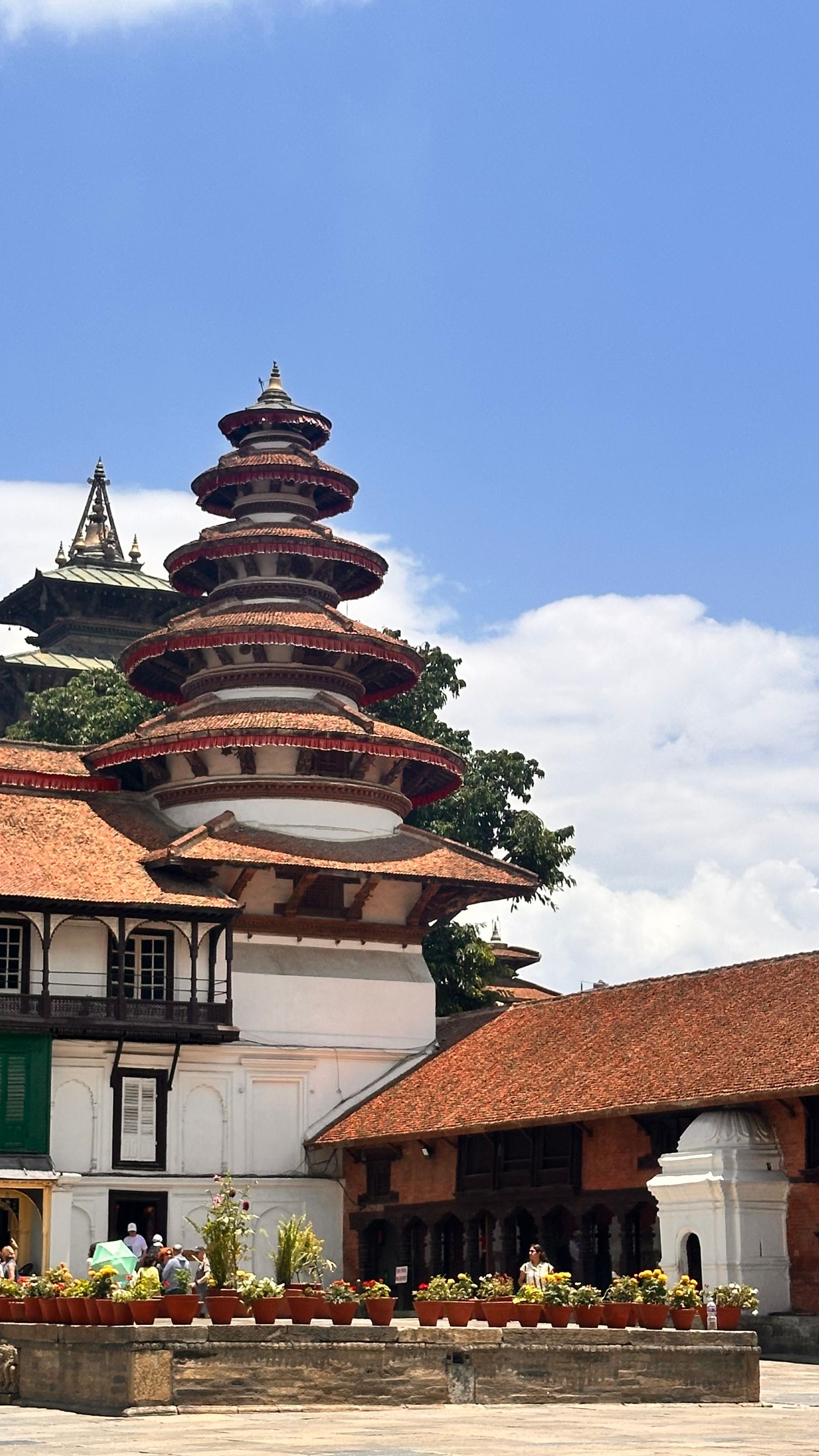
The Nepal Tourism Board describes the valley as encompassing "three ancient cities — Kathmandu, Patan, and Bhaktapur — which were once independent states ruled by the Malla kings from the 12th to the 18th centuries." Each kept its own royal palace square, which is why the World Heritage Site has three Durbar Squares rather than one. The other four zones are freestanding religious sites: two stupas and two temple complexes, described below.
The three Durbar (palace) squares
| Square | Known for | Foreigner fee | SAARC fee |
|---|---|---|---|
| Kathmandu Durbar Square | Hanuman Dhoka Royal Palace and a Taleju Temple "towering more than 40 meters"; home of the Kumari, the living goddess | NPR 1,000 | NPR 500 |
| Patan Durbar Square | Newar craftsmanship; the Krishna Temple's "21 gilded spires, built in 1637"; the Patan Museum | NPR 1,000 | NPR 500 |
| Bhaktapur Durbar Square | The best-preserved of the three, at 1,401 m elevation; the "Palace of 55 Carved Windows"; pottery and woodcarving | US$18 or NPR 1,800 | NPR 500 |
Bhaktapur is the outlier — its NPR 1,800 foreigner fee is the highest single ticket in the valley, funding the municipality's own heritage conservation, set and revised independently of the other two squares. Nepali nationals enter Kathmandu and Bhaktapur Durbar Squares free; Patan charges Nepali visitors a nominal NPR 10–30 depending on student status.
The Buddhist stupas
| Site | Foreigner fee | SAARC fee |
|---|---|---|
| Swayambhunath | NPR 200 | NPR 50 |
| Boudhanath | NPR 400 | NPR 100 |
- Swayambhunath — the hilltop "Monkey Temple," which the Tourism Board calls "one of the holiest Buddhist Chaityas in Nepal," overlooking the whole valley.
- Boudhanath — sitting "8 km to the east of downtown Kathmandu" and, per the Tourism Board, "the largest stupa in the Kathmandu Valley." The heart of the valley's Tibetan Buddhist community, ringed by monasteries and prayer-flag shops.
The Hindu temples
| Site | Foreigner fee | SAARC fee |
|---|---|---|
| Pashupatinath | NPR 1,000 per entry | NPR 1,000 (free for Indian nationals) |
| Changu Narayan | NPR 300 | NPR 100 |
- Pashupatinath — on the Bagmati River, and, in the Tourism Board's words, "considered one of the most sacred Hindu shrines in the world." An active cremation site; non-Hindus cannot enter the inner sanctum but the wider riverside complex is open. At NPR 1,000 per entry with no SAARC discount besides the Indian-national exemption, it's effectively the most expensive site in the valley if you visit more than once.
- Changu Narayan — the valley's oldest Hindu temple, dedicated to Vishnu, on a quiet hilltop away from the main tourist circuit. The cheapest of the seven for foreigners after Swayambhunath, and fewer crowds than any of the other six sites.
How much does it cost to see all seven?
Adding the foreigner fees above: NPR 1,000 (Kathmandu Durbar Square) + NPR 1,000 (Patan) + NPR 1,800 (Bhaktapur) + NPR 200 (Swayambhunath) + NPR 400 (Boudhanath) + NPR 1,000 (Pashupatinath) + NPR 300 (Changu Narayan) = NPR 5,700 total, each site ticketed separately at its own gate. SAARC nationals pay roughly half that. Nepali nationals pay nothing at five of the seven, and a token fee at the other two. Keep small NPR notes — most counters do not make change easily for large bills.
How long does it take to see the valley?
Realistically, two to three days for all seven if you are not rushing. Kathmandu Durbar Square, Swayambhunath and Boudhanath sit close enough together to cover in one day from a Kathmandu base. Patan is a short taxi ride across the Bagmati. Bhaktapur and Changu Narayan are further out — most visitors give Bhaktapur a half-day on its own, since it is the best-preserved of the three squares and rewards a slow walk through its backstreets rather than a quick loop of the main plaza.
Visiting respectfully
Dress modestly, remove shoes where asked, walk clockwise around stupas, and ask before photographing people or rituals — Pashupatinath's cremation ghats in particular are a place of active mourning, not a photo opportunity. Some monuments are still being restored after the 2015 earthquake, so expect scaffolding at a handful of sites; it does not affect the entry fee or the ticket's validity elsewhere in the complex.
Frequently asked questions
Is the Kathmandu Valley one UNESCO site or seven?
One property, inscribed by UNESCO in 1979, made up of seven separate monument zones spread across the valley — three Durbar Squares, two stupas and two temple complexes. Each is ticketed on its own.
Can I visit all seven UNESCO sites in one day?
Not comfortably. Kathmandu Durbar Square, Swayambhunath and Boudhanath are close enough to combine in a day. Patan, Bhaktapur and Changu Narayan each deserve their own half-day, so most visitors plan two to three days for the full set.
Which UNESCO site in Kathmandu Valley is the most expensive to enter?
Bhaktapur Durbar Square, at US$18 or NPR 1,800 for foreign nationals — the highest single ticket of the seven. Pashupatinath and the other two Durbar Squares are NPR 1,000 each.
How much does it cost to see all seven UNESCO sites in Kathmandu Valley?
NPR 5,700 total for a foreign national paying each site's published fee once — NPR 1,000 for Kathmandu Durbar Square, NPR 1,000 for Patan, NPR 1,800 for Bhaktapur, NPR 200 for Swayambhunath, NPR 400 for Boudhanath, NPR 1,000 for Pashupatinath and NPR 300 for Changu Narayan. SAARC nationals pay roughly half.
Can non-Hindus enter Pashupatinath?
Non-Hindus cannot enter the inner main temple, but the wider riverside complex, including the cremation ghats viewing areas, remains open to all visitors.
What is the oldest UNESCO site in the Kathmandu Valley?
Changu Narayan, dedicated to Vishnu, is generally regarded as the valley's oldest Hindu temple and receives far fewer visitors than the other six sites.
Plan the rest of your trip
The visa guide covers getting into Nepal, and the seasons guide covers when the valley's weather is clearest for photography. If the valley is a stop before or after a trek, see the trekking permits guide. You can find a place to stay in Kathmandu, Patan or Bhaktapur, or book a guided heritage tour that bundles the entry tickets.
Fees change — confirm at the gate. Entry fees from the Nepal Tourism Board's own heritage site entry fees page; site descriptions and geography from its Kathmandu Valley page — both checked 6 August 2026. Reviewed by Travia Editorial on 6 August 2026.
Comments
Public — everyone on this page can read them. Tag people and businesses with @.
Comments
Sign in to comment.