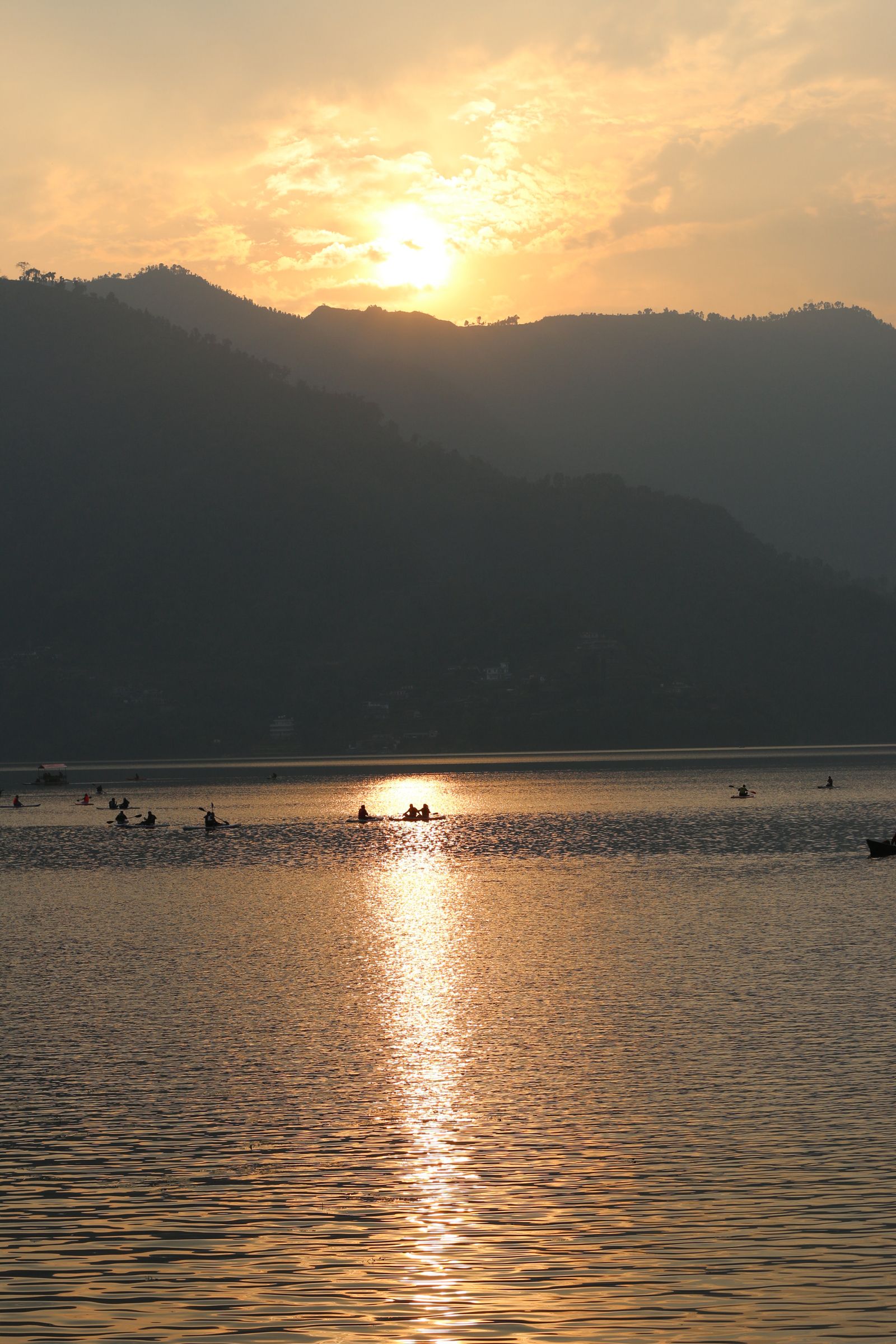
Overview
Short answer: Pokhara is Nepal's lakeside leisure city and the main gateway for the Annapurna treks, set beside Phewa Lake with the Annapurna range and the fishtail peak of Machhapuchhre rising behind it. It's a roughly 25-minute domestic flight or a 6–8 hour drive from Kathmandu, and most visitors give it two to four days — one or two for the lake and viewpoints, more if paragliding or a short trek is on the itinerary.
Before you travel: flight schedules, fares and road conditions change with the season. Geography and activity details below are checked against the Nepal Tourism Board; flight details are checked against airline and airport sources, both as of 6 August 2026.
What is Pokhara, and why does everyone go there?
Pokhara is Nepal's second-largest city and its premier leisure destination. The Nepal Tourism Board describes it around three major lakes — "Phewa, Rupa and Begnas" — with Phewa "the largest and most beautiful of the three." The Annapurna range forms the backdrop, with Machhapuchhre, "also called Mt. Fishtail," the most recognisable peak, and on clear days Dhaulagiri (8,167 m) and Manaslu (8,163 m) are visible in the distance. The Lakeside district around Phewa Lake is the hub for hotels, cafés and boat hire.
What to see and do
- Phewa Lake & Tal Barahi — row out to the Barahi Temple, sitting in the middle of the lake.
- Sarangkot — a hilltop at 1,592 m and the classic sunrise viewpoint over the Himalaya; also the main paragliding launch site.
- World Peace Pagoda (Shanti Stupa) — a hilltop stupa with panoramic views over the lake and mountains.
- Davis Falls & Gupteshwor Cave — a waterfall that feeds a sacred limestone cave system.
- The Seti River gorge — the Tourism Board calls it a "vanishing river," "barely 2 m wide but its depth reaches an astonishing 20 m," visible from bridges in town.
- International Mountain Museum — on Himalayan mountaineering and mountain culture.
- Other hiking viewpoints — Kaskikot/Naudanda (1,500 m), Kahundanda (1,520 m) and Sirubari (1,700 m), quieter alternatives to Sarangkot.
Is Pokhara good for paragliding?
Yes — it's one of the world's best-regarded sites for it, with tandem flights launching from Sarangkot over Phewa Lake and the Annapurna backdrop. Flights are weather-dependent and typically run in the morning before winds pick up; book through a licensed operator and expect the flight to be rescheduled rather than refunded outright if conditions turn.
How do I get from Kathmandu to Pokhara?
| Option | Duration | Notes |
|---|---|---|
| Domestic flight | ~25 minutes | Several daily departures; the fastest option and the only one unaffected by road conditions, but subject to weather delay like any Nepal mountain flight |
| Tourist bus | 6–8 hours | Runs daily on a scenic but winding mountain road; the budget option |
| Private car/jeep | 6–8 hours | Same road as the bus, more flexible stops |
Pokhara's airport was rebuilt as Pokhara International Airport, but as of this review it handles domestic and occasional charter traffic only — there is no regular scheduled international service despite earlier plans, so "international" in the airport's name does not currently mean you can fly there directly from outside Nepal. Fly via Kathmandu.
Why is Pokhara called the gateway to the Annapurna region?
Because it is the last city before the mountains for nearly every Annapurna-area trek. The Nepal Tourism Board describes Pokhara Valley as the "gateway to the Annapurna region where many a trekker finds his Shangri-la." Annapurna Base Camp, the Ghorepani–Poon Hill loop, Mardi Himal and the Annapurna Circuit's southern approach all start within a few hours of the city, and it's the standard place to arrange permits, guides and last-minute gear before heading up. See the trekking permits guide for what each route needs.
What's the weather like?
The Tourism Board describes Pokhara's climate simply: "summers are warm and humid while winters are mild and pleasant." Pokhara sits in a much wetter part of Nepal than Kathmandu or the trans-Himalayan trekking regions, so pack for rain outside the dry October–May window — see the seasons guide for month-by-month detail.
How many days should I spend in Pokhara?
Two days covers the lake, Sarangkot sunrise and the World Peace Pagoda at an unhurried pace. Add a third day for paragliding or the International Mountain Museum, and a fourth if you're using Pokhara as a base before or after a trek — most people arrive tired from Kathmandu and leave a buffer day either side of a multi-day hike.
Frequently asked questions
How do I get from Kathmandu to Pokhara?
By a roughly 25-minute domestic flight, or a 6–8 hour tourist bus or private car over a scenic mountain road. The flight is faster and weather-dependent; the road is slower but runs regardless of cloud cover.
Can I fly to Pokhara directly from outside Nepal?
Not on a regular scheduled basis. Despite being renamed Pokhara International Airport, it currently handles domestic flights and occasional charters only — international arrivals go through Kathmandu first.
Is Pokhara good for paragliding?
Yes, tandem paragliding from Sarangkot over Phewa Lake is one of Pokhara's best-known activities and one of the more highly regarded sites for it worldwide. Flights depend on weather and typically run in the morning.
Do I need to go through Pokhara to trek the Annapurna region?
For nearly every route, yes. Pokhara is the standard gateway for Annapurna Base Camp, Ghorepani–Poon Hill, Mardi Himal and the Annapurna Circuit's southern side, and the usual place to arrange permits and guides.
How many days should I plan for Pokhara?
Two days for the lake and main viewpoints, three if you add paragliding, more if it's bookending a trek.
Plan the rest of your trip
The visa guide covers getting into Nepal, the trekking permits guide covers Annapurna-region permits, and the Kathmandu Valley guide covers the other end of most itineraries. You can find a place to stay around Lakeside, or book a guided trek or paragliding trip departing from Pokhara.
Schedules and fares change — confirm with your airline or operator before travelling. Geography and activity details sourced from the Nepal Tourism Board, checked 6 August 2026. Reviewed by Travia Editorial on 6 August 2026.
Comments
Public — everyone on this page can read them. Tag people and businesses with @.
Comments
Sign in to comment.